.png)




.png)


.svg)
.svg)
.jpeg)




4 minute read
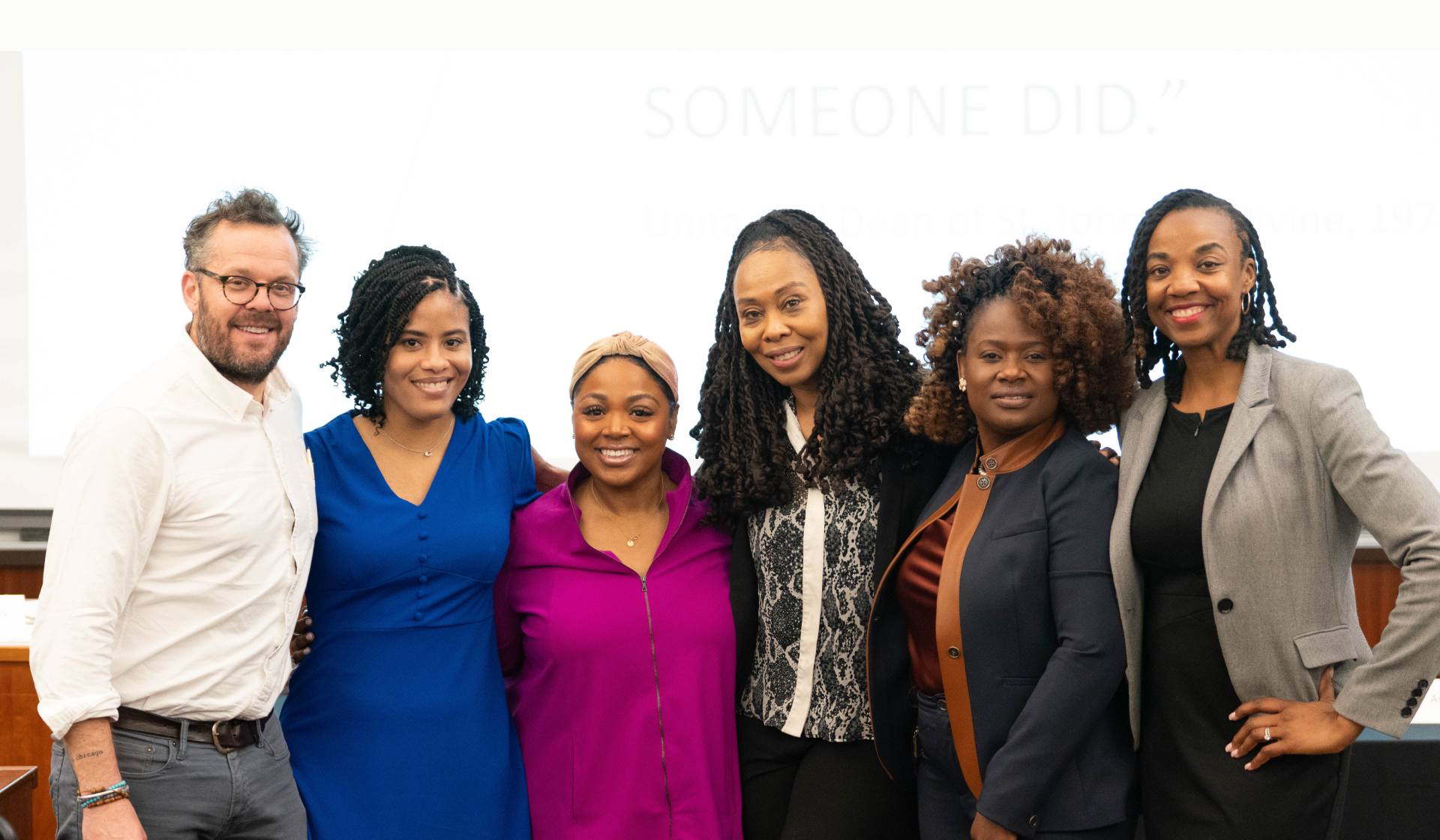
On April 17, I had the opportunity to join a panel at the Metropolitan Black Bar Association Trial Academy at New York Law School. It was exactly the kind of room I love being in, filled with people who showed up because they want to get better at trying cases, not just collect CLE credit.
The MBBA has been doing this work for a long time. Created in 1984 from the merger of the Harlem Lawyers Association (founded in 1921) and the Bedford-Stuyvesant Lawyers Association (founded in 1933), it has grown into the largest unified association of Black legal professionals in New York State, serving as a resource and advocate for Black lawyers and the communities they serve.
The Trial Academy is one of its signature programs, designed for litigators who want to sharpen their skills and engage in thoughtful conversation about trial advocacy. It brings together respected members of the bar and bench to equip trial attorneys with sophisticated, practical strategies for navigating every phase of trial practice.
The caliber of people I met, and the seriousness with which they approached the day, reflected that mission perfectly. What stood out to me was how quickly the room moved past surface-level questions. People were pressing on judgment calls, not just mechanics, and the conversation reflected that.
The Story Is the Work
The session I was part of, "Own the First Impression: Voir Dire, Case Theory, and Openings That Land," kicked off the day in the same order a trial does. I focused on opening statements, specifically the craft of storytelling and what it actually takes to hold a room. A good opening is much more than a summary of your case—it's a story with a point of view. Jurors decide early, often before the first witness even takes the stand, whether they trust you and whether your version of events makes sense to them.
.jpg?width=6928&height=4621&name=MBBA%20TRIAL%20ADVOCACY%202026-0156%20(1).jpg)
Those first few minutes matter enormously, and too often lawyers underinvest in them. They front-load the facts and over-explain: you hear it in phrases like “the evidence will show” repeated over and over, or long timelines before the jury has any reason to care who anyone is. The skill is in figuring out what your case is really about and leading with the human truth underneath the legal theory.
Storytelling in a courtroom is not icing on the cake of real legal work. Storytelling is the real work, compressed. Every hour of investigation, every document reviewed, every witness prepped, every motion argued—all of it funnels into the story you tell twelve strangers.
By the time you stand up to open a case, the preparation is finished. What begins in that moment is something else entirely: it is the privilege of telling someone's story in the one room where the telling will decide what happens to them.
Every Word Has to Earn Its Place
This is also where an economy of words comes in. It’s always been true that every word uttered in a courtroom has to earn its place, long before anyone worried about attention spans. Jurors have always been humans deciding whether to trust the person in front of them. Modern distraction sharpens the point, but the principle is older than the technology.
It's not about being brief for its own sake. It's about being precise in service of persuasion. A juror who checks out during your opening may never fully check back in. Knowing which words to use, and which ones to cut, is a skill that can be taught and refined.
But teaching trial skills only works if you’ve actually used them in the courtroom. There are times when I’ve stood up and opened cases where the jury was with me by the second sentence, and times when I could feel the room drifting before I finished my first paragraph. The ones that did not land taught me more than the ones that did.
One case I tried still stands out because I got the opening wrong the first time. The legal theory was clean and the evidence was solid, but I framed the story around the charge—where the State’s narrative began. In other words, I was explaining their case instead of telling mine.
The turning point was realizing my client’s story didn’t start with their alleged conduct. It started years earlier, with a decision that shaped everything that followed and that no one in the courtroom knew about. Once I opened there, the rest of the case finally made sense.
The jury didn’t need me to summarize the evidence, they needed me to tell them where to stand. Every lawyer I respect in this work can say the same thing, and this kind of experience is the only thing that makes the teaching worth anything.
The Tools Are Getting Better. The Craft Still Belongs to Us.
Sitting in that room, it was hard not to think about how quickly the tools around this work are changing. I spend much of my professional life at the intersection of law and artificial intelligence. My belief in what technology can do is genuine. AI can compress weeks of deposition review into an afternoon, surface patterns across thousands of pages, and help a trial lawyer organize an argument faster than any generation before us could have imagined. Those are real gains.
The tools are getting better at the parts of our work that were always mechanical. They are not getting better at the parts that were never mechanical in the first place. AI cannot stand in front of a judge or a jury and earn their trust. It cannot feel the human truth underneath a legal theory. It cannot tell a mother's story to a jury in a way that makes them see her as their neighbor.
That work still belongs to us, and the risk of this moment is not that lawyers adopt AI. It's that lawyers adopt AI and quietly let the underlying craft atrophy, because the tools make it easy to sound competent without ever becoming competent.
That is why a room like the one I was in on April 17 matters now more than ever. The MBBA Trial Academy helps ensure the craft stays alive even as the tools change around it. The fundamentals are not a holdout against technology; they are the thing technology ultimately serves. It was an honor to be part of the day, and an honor to be in that particular room with that particular lineage behind it.
Photography by Jay McClinton, Dos Ojos Photography.
-1.svg)
Get the latest from The Brief directly in your inbox
AVAILABLE NATIONWIDE
The court reporting you need. The service you deserve.

When running a law firm, you have a lot on your mind: your cases, your clients, your cash flow. You need to meet your deadlines, work up your cases, and generate new business. So the last thing on your mind should be worrying about the details of depositions. Don’t let financing or technical hurdles stand in your way.
Recommended for you: