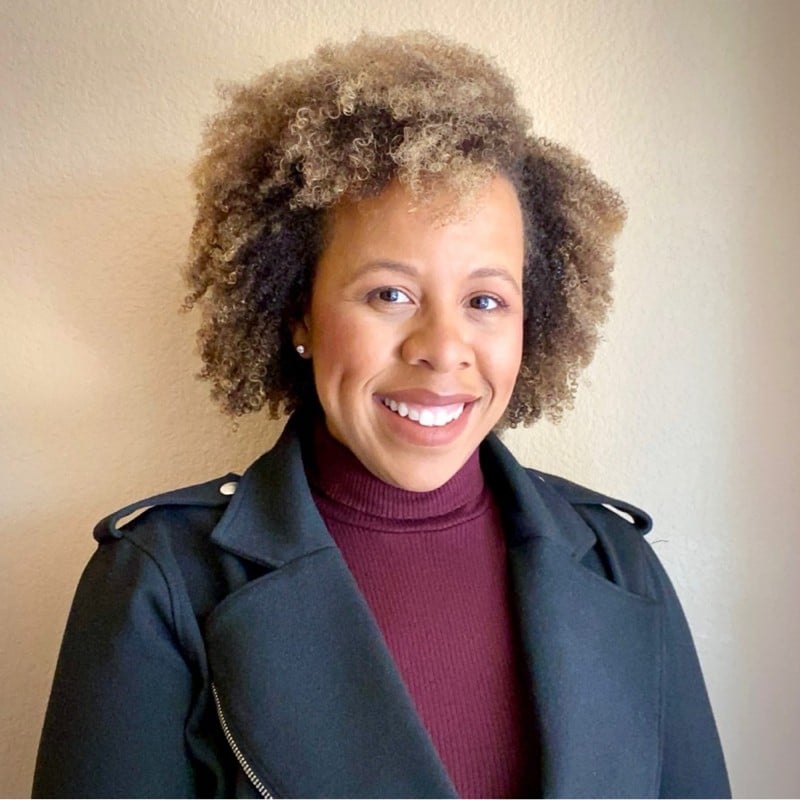
California’s SPARE Act (AB 747) takes effect January 1, 2027, targeting so-called "sewer service." Steno’s Jeff Karotkin, Senior Director of Court Filing and Service of Process, spent a recent webinar walking attendees through what changes. Jeff was a stakeholder throughout the bill’s drafting, representing the California Association of Legal Support Professionals. Here’s what he covered.
Why the SPARE Act Happened
Jeff explained that "sewer service" refers to improper or fraudulent service that lets a case proceed, and a default judgment enter, without the defendant ever knowing about it. The term comes from the idea that a dishonest process server could just as easily toss the papers into a sewer rather than deliver them. The practice has been documented for decades, most prominently in New York.
AB 747's sponsors argued the same risk exists in California and framed unknown default judgments as a "fundamental miscarriage of justice" that blocked access to the civil justice system. The old "reasonable diligence" standard varied from court to court, which made it hard to follow and hard to defend when challenged.
The 3-3-3 Rule
Jeff walked through the centerpiece of the law, known as the 3-3-3 rule and codified at Code of Civil Procedure § 415.20(b)(2) and § 415.45(d)(1). Before substituted service is allowed, a server must now make three attempts, on three different days, at three different times of day. If the standard isn't met, substituted service is at risk of being invalid.
The law also requires that an attempt to serve must take place at the defendant’s home or usual place of abode, but only in residential unlawful detainer and debt collection cases, and only if the address is known or can be found with reasonable effort. It doesn't apply to general civil and business matters or commercial unlawful detainer actions, and service at commercial mail-receiving agencies remains allowed for all case types.
Photo Requirements
California’s Judicial Council adopted new proof of service and diligence declaration forms, POS-010 and POS-012. Jeff explained that every proof of service, whether personal, substituted, or posting, now needs at least one photo of the service location. Each photo must show the date, time, and GPS coordinates, and it should capture the door of the home, entrance, or office being served. If the door can't be reached because of a gate, driveway, or street access, the server can photograph the entry point and explain why in writing.
The requirement reaches even straightforward service. Serving a corporation at its registered agent's office still means photographing the entrance with stamped data, not just handing over a signed proof.
A server may skip the photo if taking it would endanger their safety or if they can’t get a cell or GPS signal, but they must explain why in writing.
The Burden of Proof Shifts
Jeff pointed out that if a defendant swears under oath that they were never served, the plaintiff must now prove service was done correctly by a preponderance of the evidence. The firm representing the plaintiff has to be able to affirmatively prove proper service, not assume it will go unchallenged. A judgment that is void for improper service can also be challenged at any time, so defects introduced in 2027 may not surface for years.
AB 2042, the clean-up bill signed September 21, 2026, adds detail for consumer debt and eviction cases. It applies only to service attempted or completed on or after January 1, 2027, so proofs of service filed before then aren't automatically invalid for lacking a photo. It confirms a defendant can move to dismiss, not just set aside the judgment. And in debt-buyer cases, a defendant with no actual notice can still move to set aside, even if service was technically lawful.
What Attendees Asked
The live webinar Q&A covered a wide variety of subjects. Here’s how Jeff answered.
Does this apply to subpoenas? No. The new rules cover summonses and complaints. Jeff noted that servers should still treat the diligence standard as best practice for subpoenas.
Does it apply to car accident cases? Yes, if you're serving a summons and complaint, regardless of liability. A driver's home address isn't strictly required. If it isn't known and can't reasonably be located, serving at a business address is fine as long as every other requirement is met.
Does the metadata have to be visible on the photo? Only the GPS coordinates, date, and time stamp need to appear on the face of the photo. Most compliant servers use dedicated software that keeps an auditable, unaltered log of that metadata, though free phone apps that stamp photos also exist.
Does the court-ordered nail-and-mail exception for unlawful detainer cases still apply? Yes, but the 3-3-3 rule and photo requirements apply before it can be used.
What if a client only provides a business address and won't pay for skip tracing? The statute has no clean answer. Jeff's advice is to set clear expectations with your process server up front.
Four Things to Do Before January 1, 2027
- Vendor due diligence: Ask your process serving partners to demonstrate, on a sample file, how they capture GPS-stamped photos, store the metadata, and produce it on demand. As Jeff said, Ask your process serving partners to demonstrate that they're compliant. They should be able to do that. If they can't, I would be concerned."
- Template updates: The unlawful detainer complaint itself must now state the date, time, and place each termination notice was served, with a proof of service attached for each notice. Revise your complaint templates so every filing identifies the termination notices served and attaches a proof of service for each.
- Intake protocols: Require legal professionals to confirm 3-3-3 compliance and photo documentation before any proof of service is filed.
- Training: Brief litigation teams on the burden of proof shift so they know how to preserve and produce service records.
Jeff’s Advice: Ask Your Vendor to Show You
For firms weighing their options, Jeff's advice was to look for expertise, not just coverage. "Make sure you're dealing with subject matter experts," he said. Steno's California process servers are registered, and GPS-stamped photo documentation and 3-3-3 tracking are already part of the standard workflow, so there's no scramble in December. Steno also provides one point of contact for court filing, service of process, and litigation support, and DelayPay from Steno lets firms defer litigation support costs until cases resolve.
Want a second set of eyes before January 1? Steno offers a free compliance review of your current process serving workflow. Reach Steno at concierge@steno.com or 888-707-8366. For Jeff's longer take, read his analysis in Bloomberg Law.
Want to watch the full presentation? Click here.
This post is general information about California's SPARE Act and is not legal advice.








.png)


.svg)



-1.svg)

.svg)