Realtime on the World Stage
Voices Behind the Record is our ongoing series spotlighting the professionals who make up our court reporting community. Each installment takes you inside the career, craft, and mindset of a court reporter who has not only mastered the technical demands of the job, but has also stayed curious, kept growing, and pushed the profession forward.
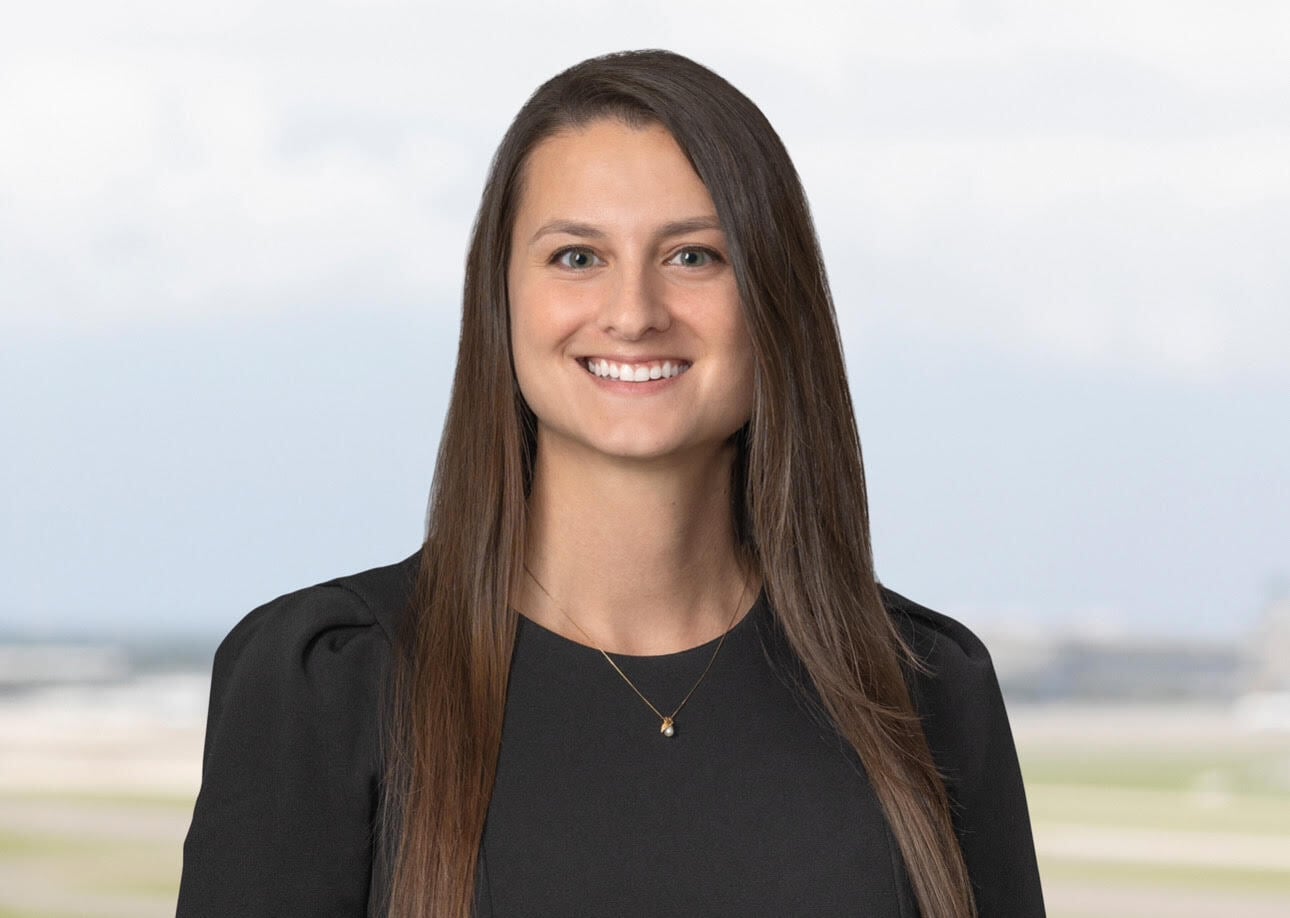
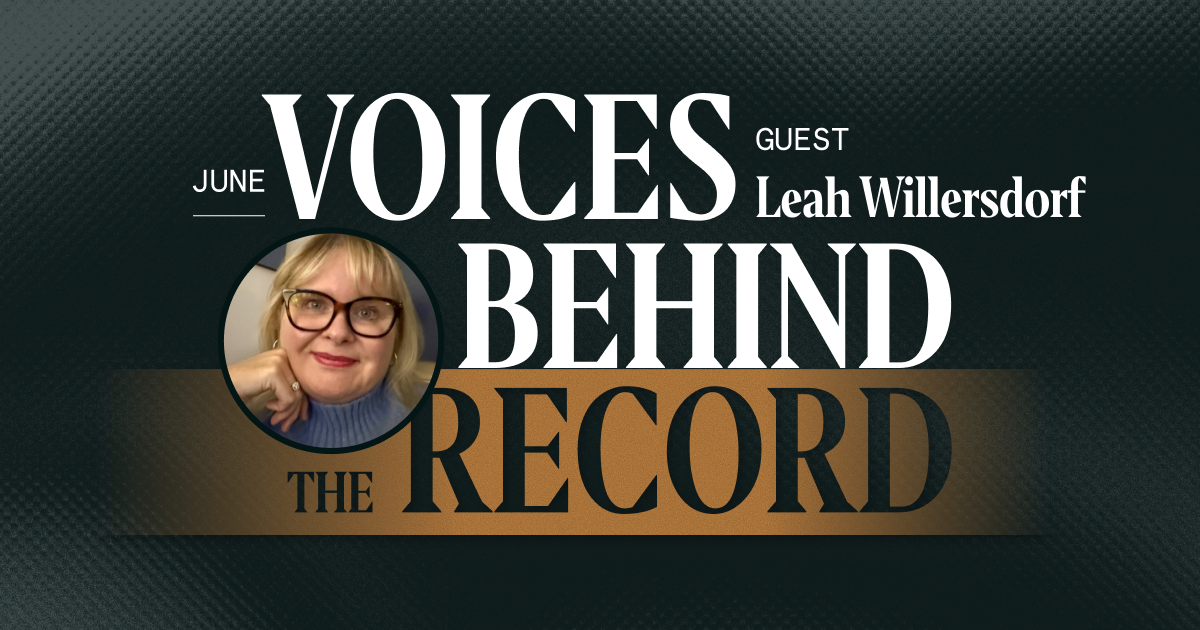
This month, we're proud to feature Leah Willersdorf, RMR, CRR, CCRR, FBIVR, QRR2, CLR Stenographer. She’s a freelance court reporter and captioner based in London whose career has taken her from Australia to the Middle East and eventually to a UN war crimes tribunal in Tanzania. She has served on the Council of the British Institute of Verbatim Reporters for 11 years, including four terms as President, and currently serves as the Institute's Media Liaison.
[Note: The interview has been condensed and edited for clarity.]
Getting Started: A Career Built on Curiosity
What first drew you to court reporting, and how did you know it was the right career for you?
The handsomeness of Harry Hamlin and Corbin Bernsen! Well, kind of. An avid watcher of LA Law in my mid-teens—for those much younger than me, it was the Suits of its day—in practically every episode there was a bored-looking woman sitting there in silence whilst tapping on a strange machine. My mum wasn't sure what she was doing and suggested I ask my Secretarial Studies teacher, Mrs. Swain. I remember her name because I'm still in contact with her today. She had once taught a student who completed the two-year Court and Parliamentary Reporting course in Brisbane, my hometown, and that made this career suddenly feel real, possible, and hopefully within reach. That former student came to speak to our class one afternoon, and I was instantly captivated.
I finished secondary school in 1989, earned the grades to enter that same course, and the rest, as they say, is history.
What did your early training look like? What challenges did you have to overcome along the way?
The course ran for two years, from 1990 to 1991, and covered Reporting 1 through 4, Spoken English, Law, Written English, Economics, Management, and Organisation.
One thing worth mentioning: the challenges of court reporting school aren't just an American phenomenon. On day one, there were 90 students. We each had to stand, introduce ourselves, and say why we wanted to become a court reporter. One by one, people said they wanted to do it for the money. I had no idea what the earning potential was—that had never been the draw for me. When my turn came, I stood up and said, "My name is Leah and I've wanted to be a court reporter since I was 15." The room groaned.
By the last day of the second year, only 10 of those 90 students remained. Six of us moved from Brisbane to Adelaide, South Australia—one of the most defining and cherished experiences of my career, working alongside some of the best reporters in the country. At least six of the final 10 are still reporting today.
One teaching method that has always stayed with me was learning to speak punctuation out loud in everyday life so it would become automatic in writing. My mum got very used to exchanges like this:
Me: Would you like a cup of tea comma Mum question mark
Mum: Yes comma Leah comma please full stop
Do you remember the moment you realized you wanted to pursue speed and realtime at a high level?
Realtime fascinated me from the moment it was demonstrated during our course. My theory is Sten Ed, so I'm a write-it-out girl, though I use some briefs and am always striving to write shorter.
As for speed, we graduated at 200 wpm, which may not sound especially high now, but at the time it was a strong benchmark. After moving to Adelaide, we could take third-party speed tests through CESA—the Commercial Education Society of Australia — and the higher the speed certificate you earned, the more you were paid. What an incentive. I moved to London in 1995 and began writing realtime from the moment I started working here.
Building Speed and Realtime Excellence
How did you train your ear and brain to keep up with fast, complex testimony?
For the RMR testimony leg—5 minutes at 260 wpm—I trained by listening to 300 wpm dictation for 20 minutes at a time. I wasn't trying to take it down; I was training my ears and brain to get used to extreme speed. On my final attempt (the seventh), the 260 felt slower because I had been listening to material 40 wpm faster. I'd also just completed Allie Hall's RMR Boot Camp, which gave me new methods that helped tremendously.
When it comes to fast, complex litigation testimony, which is mostly what my depositions cover in the European region, it's all about the effort I put into prep. They can still be saying a 10-syllable medical condition, but it's already appearing on the iPad before they've finished saying it.
What does your practice routine look like today?
I've been in Rich Germosen's 100-Day Challenge Practice Group since January 2022. The commitment is simple: practice at least 15 minutes a day and post your practice daily. I once told Rich at an NCRA convention that I didn't have time for that. One look from him was enough to get me onto the waiting list.
These days I practice to podcasts that interest me, the TV news, and the many folders of dictation in the practice group. I also regularly use Allie Hall's AHRE courses for speed work.
What role did dictionary building and cleanup play in your realtime success? What advice would you give reporters who want to start offering realtime but feel intimidated?
If you're nervous about providing realtime to the judge or attorneys, start by writing realtime for yourself. It quickly shows you where your dictionary needs work, especially with word-boundary conflicts caused by prefix and suffix issues. Dictionary work is something we do throughout our entire career.
Remember, realtime is an added service you are providing — your realtime should be readable and usable. I've always thought we are only as good as our personal dictionary, but you need to know exactly what's in it. With US depositions being 98% of my work, I have a US spellings job dictionary that I add to regularly. Just a few years ago I discovered it's not "cosy" but "cozy." Well, of course the whole of America knew that, Leah.
What’s one adjustment or breakthrough that significantly improved your realtime accuracy?
Is it pompous to say none? There must be one!
On-the-Job Insights
What's your mindset going into a challenging realtime job?
Here's what helps me, especially on the eve of the first day of an assignment: a lot of prep, a good night's sleep, and a few nerves.
Most of my work is high-end litigation, with realtime, roughs, and rush delivery. A strong dictionary matters, but so does preparation. If I know I'm going to hear tissue-repair peptide names, source code terminology, or intricate anatomy, I want those terms to be familiar before the job begins—because you just know that the attorneys will be conversant with the jargon and will rattle them off like they're saying their ABCs.
I prioritize a good night's sleep because it shapes everything: mindset, patience, confidence, and how well I handle pressure. When you're rested, you're far better equipped for the day. Because I prep thoroughly, I usually sleep well the night before an assignment. I'm an early-to-bed, early-to-rise person. I always catch two trains before the one I actually need, which would get me to the law firm an hour before start time—so you'll invariably find me in a coffee shop in London somewhere around 7:15 AM.
I also think a few nerves are healthy. From the moment the videographer reads us onto the record until the admonitions are out of the way, I'm usually a little tense. Some of that anxiety is practical: getting there on time, setting up smoothly, and having enough time to troubleshoot if something goes wrong.
How do you handle difficult speakers—fast talkers, heavy accents, or overlapping dialogue?
My hands have been known to come off the machine and up into the air, while the words "Counsel, there's no record while four of you are speaking at once" come out of my mouth. It's not a regular occurrence, but like Sheri mentioned in her installment of this series, I too have used Rich Germosen's "Counsel, your record is suffering" when there's simultaneous speaking.
Living and working in this region means dealing with accented witnesses almost every day. The key is to say politely and professionally when you're not understanding something, always mindful that English may not be the witness's first language.
What's your approach when something goes off track in realtime?
Let it go—and sorry if saying that has now put that song in your head. Nobody is perfect. Even worse than something going off track, in my opinion, is being called out for what we stenographers term a mistranslate ("pint" for "point," say) when we know very well it will be corrected by the reporter or scopist.
Lessons Learned Along the Way
What's one thing that ultimately made you a better reporter?
Becoming proficient at fingerspelling. Believe it or not, that only happened when I worked in Tanzania at the UN's International Residual Mechanism for Criminal Tribunals during the pandemic. I was covering a war crimes case related to the Rwandan Genocide.
Rwanda is made up of provinces, which are subdivided into districts, sectors, cells, and villages, with names such as Burera, Rubavu, and Gasabo, among many others. On top of that, we had all the African names of witnesses and persons of interest in the case, and each day there were new ones. Fingerspelling became my best friend. And the best thing about the Kinyarwanda language? More often than not, words, places, and names are spelled just how they sound.
Looking back, what would you tell your younger self when you were still in school or early in your career?
Keep the newspaper articles of things I've reported that were newsworthy. I did just that for about ten years, but when I moved I threw everything out. I'm a bit sad about that, really.
What's something about realtime reporting that most people don't realize?
Can I say the adrenaline rush? It's highly addictive watching your beautiful realtime coming up on the screen, watching attorneys scroll your iPads, and sometimes take it out of the room during breaks.
Proud Moments and Fun Experiences
What's a job or moment in your career that made you especially proud?
The aforementioned UN assignment in Arusha, Tanzania for five months on and off throughout COVID has been one of two highlights. For me, the UN was a career-long steno goal, and let me tell you, those nerves were like nothing I'd had before, but they sure did keep me on my feet. Every day I had butterflies fluttering in my belly, but I became used to them.
We were sending realtime to everyone in the courtroom and to roughly 100 people offsite. The trial was conducted in three languages—English, French, and Kinyarwanda—and involved six accused. I worked alongside a French stenographer, now a lifelong friend, who had covered some of the original ICTR (International Criminal Tribunal for Rwanda) trials beginning in the late 1990s.
It was an assignment that changed me in certain ways, and I'll always be grateful for the experience.
The second highlight was an assignment in January of this year at another UN organ of justice, the International Court of Justice in The Hague. Located on the right-hand side of the Peace Palace, the Great Hall of Justice is just incredible, and to steno in there was quite the experience. The hearing was in front of 17 judges, and whilst the content of the hearing was harrowing to say the least, writing pages of history was a milestone event. Again, one I will never forget.
Have you had any unexpected or memorable experiences on the job?
Just briefly:
- Working in a 12th century wine cellar in the deepest depths of Tuscany, which had an Etruscan tomb below it. The wine shop above was the oldest in the area, dating back to the 15th century.
- Working in an old converted windmill in the Flanders region of Belgium; working in a castle in the UK; working in a palace in Madrid.
- Having my bare leg humped by a dog whilst holding court on an Aboriginal Reserve in the Australian Outback.
What do you love most about being a court reporter today?
I still love seeing my realtime coming up on the screen and attorneys making use of it—or even seeing my captions up on the big screen when I caption conferences.
I love watching other stenographers on their machines and thinking, "How is she doing that?"
I love how I've met people from all walks of life along the way and the friends I've made all over the world.
I love trying to be better today than I was yesterday.
Beyond the Machine
When you're not reporting, what do you enjoy doing in your free time?
I'm a sucker for the Bravo series Below Deck—Mediterranean, Down Under, Sailing—all of them!
Do you have any hobbies or interests that might surprise people?
I have always been fascinated by volcanoes after choosing to do an assignment on Pompeii and Mount Vesuvius in primary school. I cried when I actually went to Pompeii, and in the recent past I had the pure delight of taking the evidence of a volcanologist relating to the White Island eruption in New Zealand. I can honestly say I did not want that testimony to end.
Rapid-Fire
Coffee, tea, or something stronger?
Tea (with coconut milk); Champagne.
Favorite type of job: depo, trial, or something else?
Depositions all the way!
One word that describes realtime:
Adrenaline.
Your go-to focus or "get in the zone" trick before a big job?
That good night's sleep.
Final Advice
For reporters striving to reach your level, what's the single most important thing they should focus on?
Realtime. Work hard on your dictionary and you will reap the benefits personally, professionally, and—dare I say it—financially (there's that money thing all those other students were talking about on day one). And if you're nervous or doubting your ability once you've put in the dictionary work, I'll end with a quote from Erin Hanson:
"And you ask, 'What if I fall?' Oh, but my darling, what if you fly?"
***
Leah Willersdorf is a reminder that the profession has no borders—geographic or otherwise. From a Brisbane classroom to a UN war crimes tribunal, from a windmill in Belgium to the Great Hall of Justice in The Hague, she has carried the record with her everywhere she's gone. We're honored to feature her story.
Do you know a court reporter whose story deserves to be told? Reach out and let us know. We'd love to feature them in a future installment of Voices Behind the Record.







.png)

.svg)
.svg)
.png)
.svg)


-1.svg)