Speed, Realtime, and the Resilience It Takes to Master Both
Welcome to Voices Behind the Record, our ongoing series spotlighting the professionals who make up our court reporting community. Each installment takes you inside the career, craft, and mindset of a court reporter who has not only mastered the technical demands of the job, but has also stayed curious, kept growing, and pushed the profession forward.
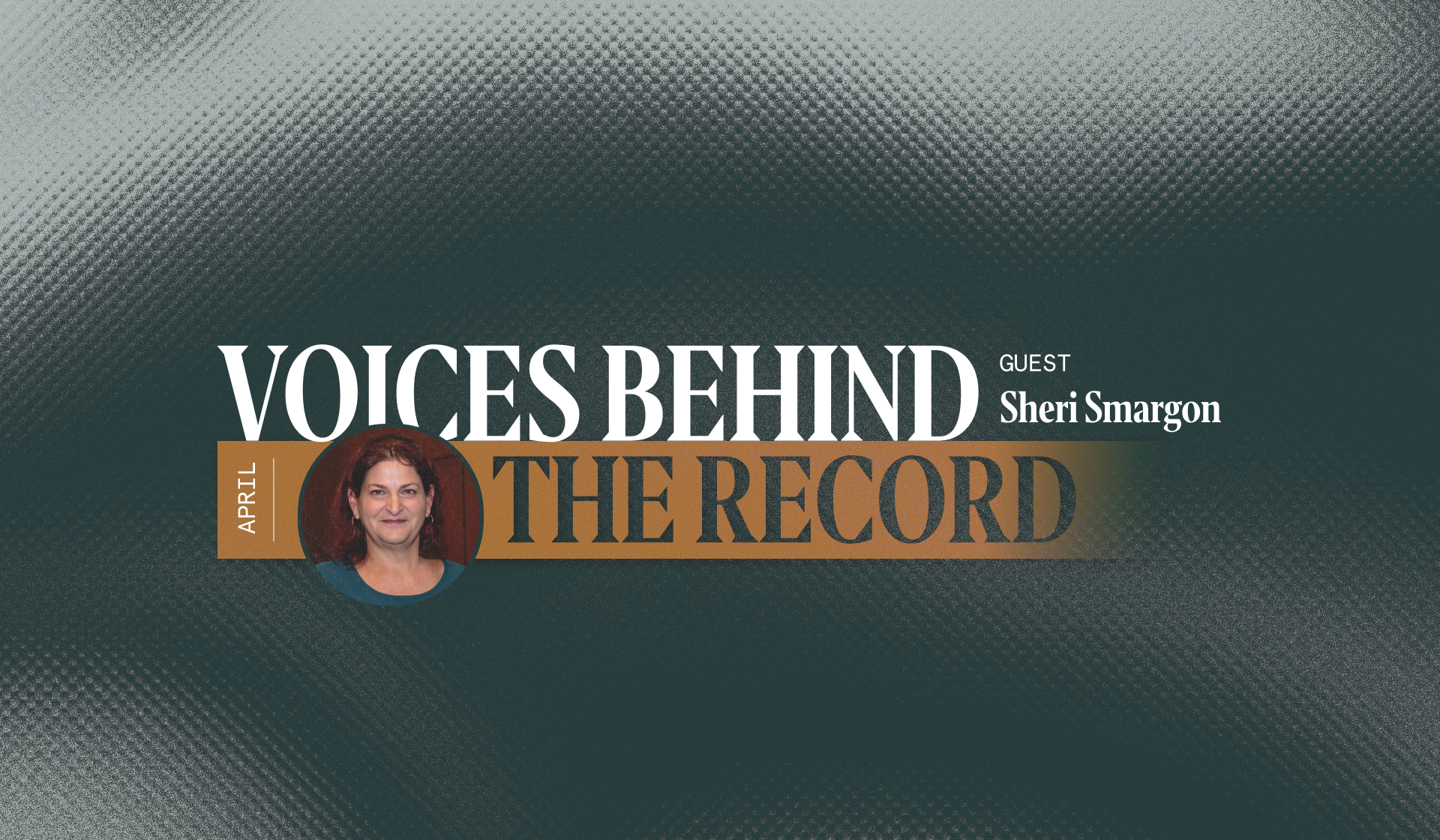
This month, we're proud to feature Sheri Smargon, RDR, CRR, CRC, FPR-C, M.A. She’s a California-licensed court reporter (CSR No. 14515) and current Chair of the Florida Court Reporters Association Testing Committee. She has claimed the Intersteno Audio Transcription World Champion title twice and has placed on the Intersteno Realtime podium two times as well.
Closer to home, she has medaled at the NCRA Speed Competition three times in the past four years, including in 2025.Years ago, Sheri came across a quote from Eleanor Roosevelt that shaped how she approaches her work: "No one can make you feel inferior without your consent." That mindset comes through in everything she does. We sat down with Sheri to hear how she got here, what keeps her sharp, and what she'd tell any reporter who wants to compete at the highest level.
[Note: The interview has been condensed and edited for clarity.]
Getting Started: A Career Built on Proving People Wrong
What first drew you to court reporting, and how did you know it was the right career for you?
I started court reporting school the day after I graduated high school. I did it for many reasons, among them, the fact that if I didn't do something after high school, I'd do nothing. I had been working for several years already, couldn't afford college, and someone from the school came to speak to us and said that court reporters were in the middle of all the action and could make $50,000 a year their first year out of school.
So I started school with a borrowed yellow manual machine and off I went on the public bus to be flogged daily by theory. I failed theory twice. And because this was a technical school, they offered various programs, including an LPN program that my mother was enrolled in. My theory teacher pulled my mother aside one day and told her I wasn't very good at this and should think of doing something else. Just what every 17-year-old wants to eavesdrop on. So I thought, "I'll show her."
I didn't practice much back then. I'd practice right before a test and participate in live dictation when it happened. I'd sit in the room listening to the high-speed students try for their 200s or 225s and think there was no way I'd ever get that fast, so I listened to music instead. That's actually where my love for country music started. From Randy Travis to Garth Brooks, then MC Hammer, En Vogue, and finally Billy Joel's "We Didn't Start the Fire." My steno looked rough, but it built my dictionary.
Just as I got my first 225, I had a workplace accident and sliced the tip of my index finger off. They stitched it back on, and somehow I hit my second 225 a month later. It took me exactly two and a half years to finish school, never getting stuck at a speed.
From Captioning to Depos: Never Stop Moving
Your career has taken some unexpected turns: captioning, broadcasting, even a stint in Australia. Can you walk us through how you got from court reporting school to where you are today?
After graduating, I went to work for a county and became a captioner largely by accident, joining a team that became the first in the nation to open caption county government meetings. From there, I moved to Pittsburgh to work for VITAC, one of the largest captioning companies in the country. My first day on air was the day of the Oklahoma City Bombing. I went on to caption NBC Nightly News with Tom Brokaw, Saturday Night Live, the Olympics eight times, and was on air for 16.5 hours straight during the 9/11 disaster.
I then moved to Australia, which is, you know, right around the corner from Florida. But I had always wanted to go there. And why not? New challenge! Sydney was lovely, but the job wasn't. And because I am a bright bulb, the guy I was dating was Austrian…not Australian. (Face plant.) So I came back to Florida.
Eventually I went back to work for VITAC, this time remotely, covering national news, sports, and weekly broadcasts like The Voice. In 2016, I made the move to depositions and realtime, and also completed a bachelor's degree, a master's degree, and a slate of national certifications including my RDR and CRR.
Building Speed and Realtime Excellence
How did you train your ear and brain to keep up with fast, complex testimony?
Because I didn't practice much in school and didn't own a car, I had a lot of free time on the bus to listen to tapes on my Walkman. Not dictation tapes—books on tape. They're sustained and literary, and they kept me engaged. I'd listen and sometimes "air write." When I got my first car, it had a tape deck, so I'd pop a tape in while driving and practice in my head. I still do that to this day with everything—TV, radio, songs, speeches. I'm always writing in my head.
What role did dictionary building and cleanup play in your realtime success?
Because I write most everything out, I usually don't hesitate on words; they're literally just syllables in my brain. But I know if I have prefixes and suffixes in my dictionary, I can get most words to translate correctly or at least close. Of course, during one NCRA speed competition, I did write "blah, blah, blah." But honestly, that's what I heard.
On the Job: Mindset, Difficult Speakers, and Knowing Your Worth
What's your mindset going into a challenging realtime job?
I prep ahead of time. I look at previous transcripts, not at the transcript itself, but at the word index. I see how many times a word appears, and if it's frequent, I'll make a job dictionary brief for it. Who wants to write out "obstetrician" 200 times in a med-mal case? I also arrive early. I could get lost leaving a paper bag with one end blocked off, so I build in extra time to park, get organized, get caffeine, and get set up. There's no worse feeling than people waiting on you to start.
How do you handle difficult speakers—fast talkers, accents, or overlapping dialogue?
I learned at a conference years ago to stop saying "I'm sorry" when I interrupt. One, I usually wasn't sorry. Two, some attorneys don't care. The wonderful Rich Germosen taught me to put the onus back on the attorneys: "Your record is unclear." It's a simple shift, but it changes the dynamic. I might say: "Attorney Smith, if you're going to speak at the same time as Mr. Jones, I won't be able to report either one of you and your record will be unclear." Some attorneys actually listen… for about three seconds.
What advice would you give reporters who want to start offering realtime but feel intimidated?
Do realtime for yourself, every job, every time. It's a great safety net if your storage fails, and it shows you how your writing translates so you know what to work on.
And never, ever offer your realtime for free. Your hard work, your talent, your time, and your years of experience all factor into what you charge. Know your worth. Know your floor. If a firm wants your feeds, they'll negotiate, but you need to negotiate too, not give it away.
I'd also caution anyone who thinks 95% translation is enough to start offering realtime. At 225 words per minute, 95% means roughly 10 errors per minute. Per minute. Would you want to read through that? Would you pay for that? Learn where you actually are before you go live.
Proud Moments and What's Next
What's a job or moment in your career that made you especially proud?
Medaling for the first time at an NCRA competition was a defining moment. Being in the competition room with people I'd looked up to my whole career—and watching new faces take their shot—is genuinely energizing. After that, I went back to Intersteno and medaled there too.
But I'm also deeply proud of what we built at the Florida Court Reporters Association. Five years ago, we launched the Florida Professional Reporter – Certified Examination, a skills test that complements our written exam and opens real doors for our members. We offer reciprocity for anyone who holds the RPR or higher, and we'll soon be extending that to voice writers. If a candidate doesn't hold a national certification, they can test with us, pass, and start accessing new work opportunities across the state.
Supporting your state association is more important than most reporters realize. You don't have to join the board or become president (though it's rewarding if you do), but attending conventions, getting involved, and networking can be genuinely priceless.
Rapid Fire
Coffee, tea, or something stronger?
Coffee with sweet cream and five Equal… and a Coke Zero. If they only have Pepsi, I'll have water.
Favorite type of job?
I still love live CART jobs. Every year, my CART partner Lisa Johnston and I cover a large RV show. It's challenging, but it's fun.
One word that describes realtime?
Tricky. (How do you look professional while sweating through silk?)
***
Sheri is a reminder that excellence isn't just built from speed drills and steno theory. It's built from resilience, curiosity, and the willingness to keep showing up, keep competing, and keep raising the bar for yourself and for everyone watching.https://brief.steno.com/voices-behind-the-record-sheri-smargon
Do you know a court reporter whose story deserves to be told? Reach out and let us know. We'd love to feature them in a future installment of Voices Behind the Record.



.png)



.png)

.svg)
.svg)
.svg)


-1.svg)